
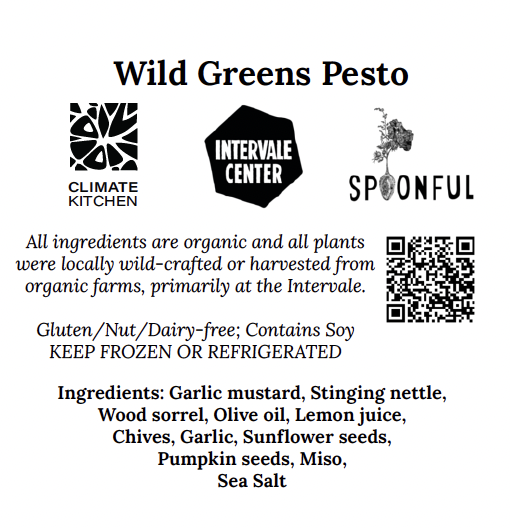
Wild Greens Pesto:
A Story about Processing Invasive Plants as Food for Our Neighbors!
Abundant * Nutritious * Delicious
Sponsors: UVM Climate Kitchen, Intervale Center, Spoonful Herbals, UVM Osher Center for Integrative Health
Staff: Katherine Elmer, M.S. NB-HWC, Faculty Member UVM Dept of Agriculture, Landscape and Environment
Liliana Bettolo, Plant and Soil Science Masters student
Willa Hoerauf Plant Biology B.Sc. student

Make it at home!
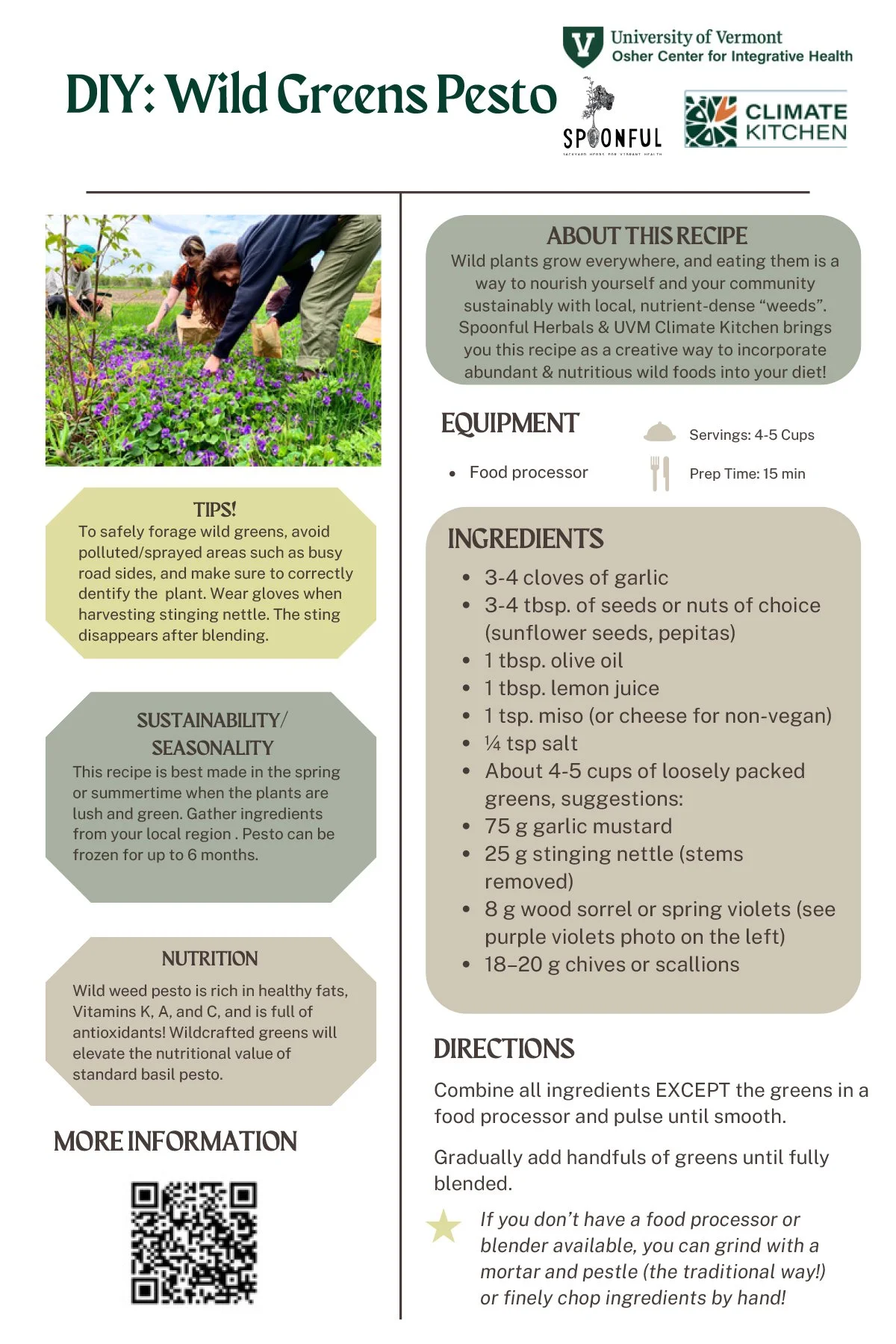
Substitute locally harvested Wild Greens in your favorite pesto recipe or Use Ours: Link to recipe
Why make it?
A note from Katherine Elmer, Spoonful Herbals’ Founding Director:
Nourishing ourselves and our neighbors with local wild foods is an affordable and evidence based way to reconnect with the land and enhance access to nutrient dense foods. Wild medicinal plants grow everywhere in our region, and bringing these wild foods into our homes from our backyards and local environment connects us to nature, cultivates ecological citizenship and stewardship, nourishes us, and creates opportunities for sustainable and enjoyable community action. Feeding our neighbors with nutrient-dense, abundant, invasive plants, prepared into delicious foods such as wild weeds pesto, japanese knotweed ice-cream, or elderberry syrup bridges culinary innovation, mutual aid, and environmental stewardship.
For the last 12 years, as a faculty member and as founder of Spoonful Herbals, a local educational nonprofit, I have experimented with teaching harvesting and preparation of these foods through community and campus workshops. Spoonful Herbals is the only member of Salvation Farms’ “Vermont Gleaning Collective” that focuses on wild and medicinal plants (including sustainably wild-crafted foods), and this would be a great opportunity to tell our story and build capacity for more “medicinal plant gleaning” local hubs around the state.
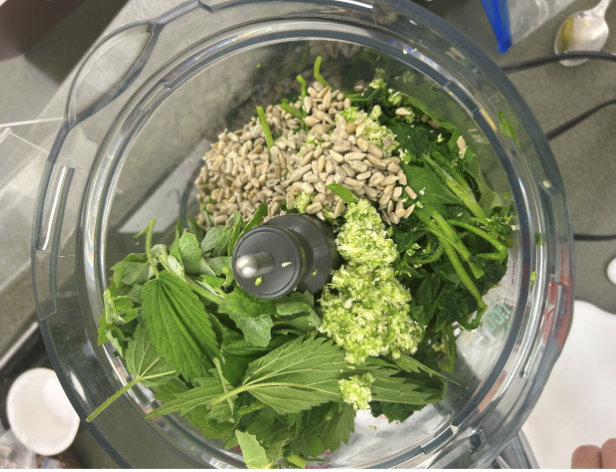
In Summer 2026, with the support of UVM Climate Kitchen and the Intervale Center, we produced wild greens pesto made with invasive garlic mustard and nutritious nettles to feed the 200+ members of the Intervale’s Fair Share program. Garlic mustard and nettles are abundant and, in some cases, “nuisance” weeds that are also rich in antioxidants, anti-inflammatory phytonutrients such as the sulfur compounds and essential minerals such as iron, calcium and magnesium. We can enhance assimilation and nutrient density by adding lemon juice/citric acid to chelate the minerals, and add healthy fats with olive oil and sunflower seeds. These fatty acids are nutritious and anti-inflammatory on their own, and they also enhance assimilation of vitamin K, an essential component in healthy blood clotting. We partnered with the Climate Kitchen to refine our pesto recipe in terms of flavor, storage, food safety, ease of preparation and scalability, and nutrient density.
We hope you enjoyed our pesto and our inspired to make it yourself and with your neighbors in seasons to come!
Warmly,
Katherine
UVM Climate Kitchen: 2026 Summer Institute Research Questions
1. How might we best partner with our local Urban Food Forest collaborators to remove invasive garlic mustard and transform it into food for our community?
2. How can we improve our garlic mustard and nettle pesto recipe to maximize flavor, shelf stability, ease of preparation/scalability, use of local (ideally invasive) plant ingredients, nutrient density and universal design (allergen friendly)?
3. How can we measure the broad and specific impacts of teaching community members (and ultimately community mutual aid leaders) how to safely harvest local edible plants and prepare them into delicious nutrient dense foods for themselves and their communities?
Ecological Benefits
Garlic mustard is an Introduced (new term for “invasive non- native) Species that threatens the biodiversity of the ecosystems it inhabits by limiting the growth of nearby plants.
Traditional garlic mustard control tactics involve herbicides which cause other harm.
Some research has suggested that garlic mustard abundance is correlated with an increase in deer ticks and lyme disease risk.
Health Benefits of individual ingredients
“It soars above Kale [in nutrient density]”
- Emily Stone, RD UVM Health Registered Dietician on Stinging Nettle
Garlic Mustard, a relative of kale and arugala, is rich in minerals and isothiosulfonates (sulfur-based compounds proven to be antioxidant, anti-cancer, and anti-inflammatory)
Stinging Nettles are mineral rich- particularly Calcium, Magnesium, Phosphorous, Potassium, Selenium- and they are a bioavailable source of Iron (Fe)
Wood Sorrel is rich in vitamin C and brings a bright citrus flavor
Garlic is a superfood with antiviral, heart health-promoting and many other beneficial properties
Pumpkin seeds are rich in Selenium and Omega-3 fatty acids
Miso is a probiotic food
Health Benefits when combined:
Wild Greens Pesto:
Freezing, thawing and blending the greens enhances nutrient bioavailability.
Heart-Healthy unsaturated Fats in the olive oil and seeds enhance bioavailability of Vitamin K
Fats improve flavor by dispersing the fat-soluble terpenes (flavor compounds)- and pleasure enhances digestion!
Vitamin C in lemon juice and sorrel chelate (bind) minerals to optimize absorption (Ca, Mg, Fe)
Safety:
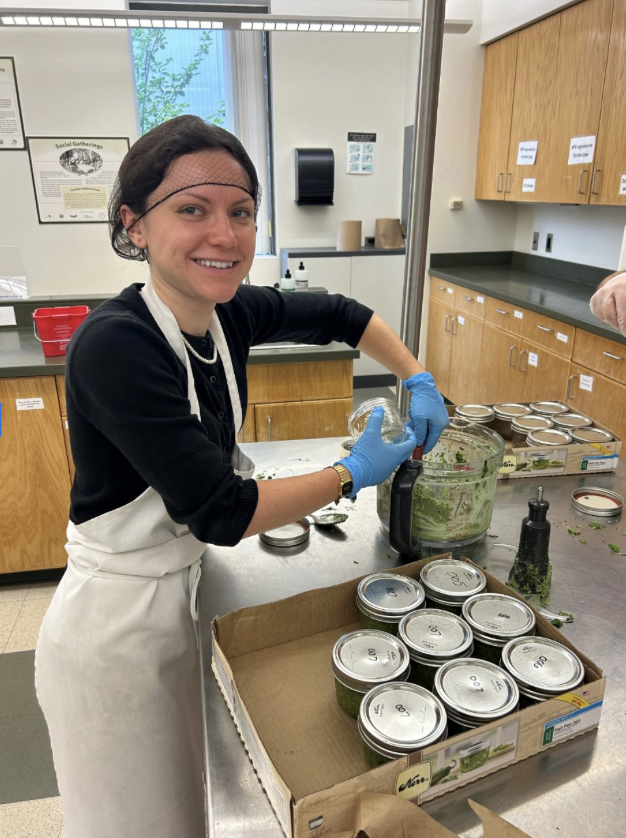
Wild-harvested plant material was harvested from organic farms or public land employing organic practices.
All wild-harvested herbs were carefully identified and collected with the supervision of a qualified herbalist (AHPA
certified)ServSafe food safety standards were used throughout the storage and production steps.
Wildcrafting Resources
Garlic Mustard
Stinging Nettle
Wood Sorrel
Other Delicious Edible Plants to Consider for your Wild Greens Pesto- Use whatever is in season and combine with culinary plants such as arugula or basil!
Spring: Violet Leaf, Chickweed, Wood Nettle, Plantain, Dandelion,
Summer: Lamb’s Quarter, Dandelion, Purslane
Plants to Avoid: Poison Ivy, Poison Parsnip, Poison Hemlock (rare)
Want to learn more?
Check out:
Spoonful Herbals’ YouTube Channel
Ongoing Community Classes
Wildcrafting Guild
Community Herbalism Apprenticeship Program
